03 August 2026
Are you interested in a career where engineering meets strategy, planning and problem solving? Have you considered becoming an estimator?
We’re currently shining the spotlight on our estimating team—the engineers who help to determine how our infrastructure projects will be built. They plan and shape our projects long before heavy machinery rolls onto a worksite.
Estimators work with designers, suppliers and construction teams to develop construction methodologies, assess risks, price labour, materials and plant. It’s about solving complex engineering problems to build a project safely, efficiently and cost-effectively.
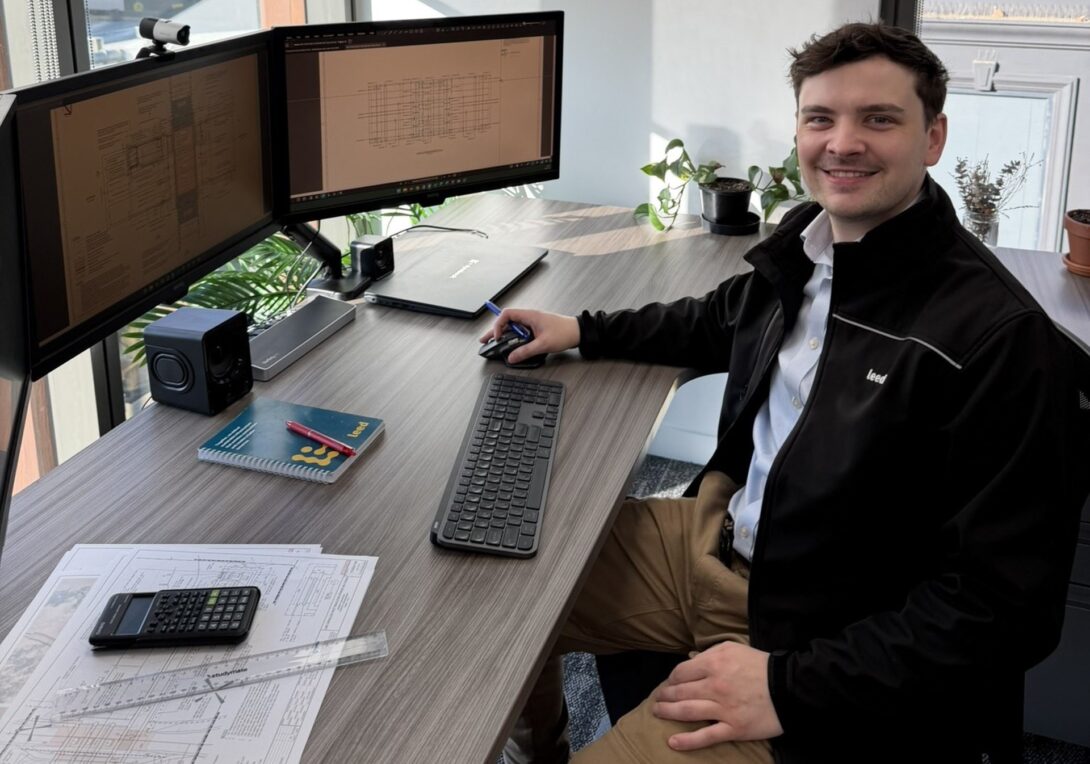
Jeremy Marks is based in Leed’s Melbourne office. He told us why it’s the ‘best of both worlds’ and shared some aspects people might not realise about estimating. Read on to find out more.
Why did you choose to become an estimator?
Having experience both on and offsite, estimating aligns with how I enjoy problem solving – utilising a detail and technical approach. While having good work-life balance based in an office, I also get regular opportunities for site visits which give the best of both worlds – it’s always fun having the odd work-based road trip.
What do you like about the role?
I find it rewarding diving into a set of drawings, digging through a geotechnical report, working as a team to then pull everything together to visualise the entire project. Fortunately, at Leed I get to experience a wide range of projects which keeps things fresh and joyful while furthering my professional skillset.
Who is best suited to this role? What qualities should they have?
It’s perfect for detailed, analytic minds who also get how things work on a construction site – someone who likes numbers but also collaborating with others, be it co-workers, site crew, clients or suppliers.
Tell me something people don’t realise about estimating?
Most people assume we just sit around crunching numbers in Excel all day, but surprisingly it can be a very creative job. Essentially the entire construction process must be visualized from scratch before any work physically takes place. This requires a comprehensive understanding of the construction processes while using experience to consider the project from a risk perspective.
What is it like to see one of your projects actually being built?
Some recent project highlights were Shepparton Clear Water Storage Tank, Urunga Sewage Treatment Plant and Tantangara excavation.
The sheer scale of construction never ceases to surprise me. For example, the Shepparton CWS Tank has a 70m diameter, and it’s a lot longer walking that distance out compared to reading it on the drawings. There is also great satisfaction being able to connect the drawings to what is being built in real time – to identify the who, what, why and how.
Find out more about working for Leed.